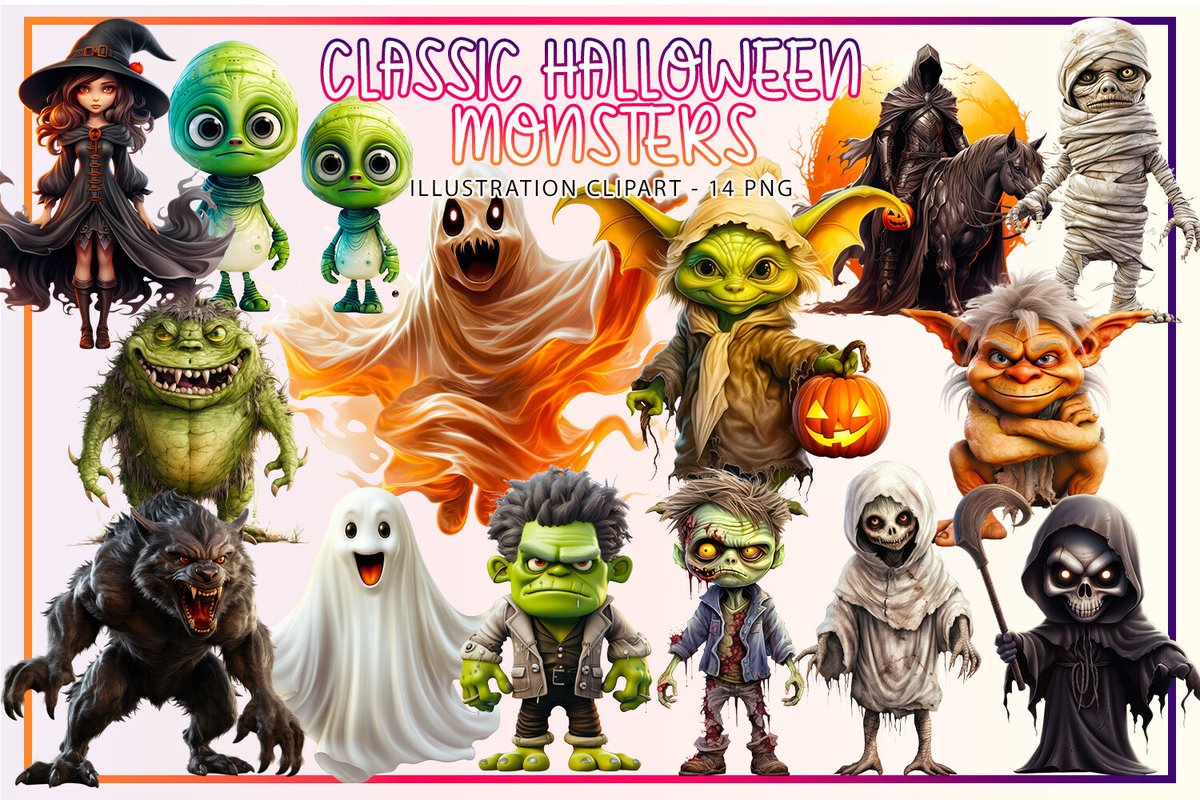
There’s a unique magic to Halloween, isn't there? A primal thrill that draws us back to the shadowy corners of folklore and fiction year after year. While modern horror constantly invents new terrors, it's the Classic Halloween Monsters & Figures that truly anchor our spooky season traditions. These aren't just characters; they're archetypes woven into the very fabric of our cultural imagination, creatures and specters that continue to haunt our collective consciousness and spark our imaginations decades, even centuries, after their conception.
They are the familiar faces of fear, the enduring symbols of what lies beyond the veil of the mundane. From ancient superstitions to Victorian literature and classic cinema, these icons have shapeshifted through time, remaining terrifyingly relevant. So, pull up a creaky chair, because we're about to delve into the history, psychology, and enduring appeal of the ghouls and goblins that make Halloween, well, Halloween.
At a Glance: Why These Monsters Never Die
- Deep Roots: Many classic monsters originated in ancient myths, folklore, and religious beliefs, reflecting universal human fears.
- Cultural Mirrors: They often embody societal anxieties, scientific progress, moral dilemmas, and the unknown of their respective eras.
- Timeless Archetypes: Each monster represents a fundamental concept—fear of death, the stranger, the beast within, hubris, the supernatural.
- Adaptability: Their stories have been retold, reinterpreted, and reimagined across literature, film, art, and even video games, keeping them fresh.
- Halloween Mainstays: They are the essential building blocks of Halloween decor, costumes, and storytelling, providing a shared language of fright.
The Enduring Allure of the Macabre: Why We Love to Be Scared
Before we introduce our rogues' gallery, it’s worth asking: why do we willingly invite these frights into our lives? Psychologists and cultural historians often point to several reasons. Halloween, in many ways, is a safe space to confront our fears. It’s a controlled environment where we can engage with the taboo—death, the grotesque, the supernatural—without actual danger. It's cathartic.
These monsters also tap into universal human experiences: the fear of the unknown, the loss of control, the confrontation with mortality, and the darkness that exists both outside and within us. By exploring these themes through the lens of a vampire’s immortality or a werewolf’s transformation, we gain a sense of understanding, even mastery, over things that truly terrify us in real life. Plus, let's be honest, it's just plain fun to scream a little, isn't it? If you're looking for more inspiration on how to embody these legendary figures, you might find Your guide to Halloween characters incredibly helpful.
Meet the Pantheon of Panic: Classic Halloween Monsters & Figures
Let's dive into the storied past and present of the creatures who continue to dominate our spooky celebrations.
Dracula: The Aristocrat of the Undead
No monster quite embodies aristocratic menace and seductive danger like Dracula. His image is instantly recognizable: the slicked-back hair, the piercing gaze, the flowing cape, and those iconic fangs. But his journey from folklore to literary legend is as chilling as his bite.
Origins & Evolution
While tales of blood-sucking fiends exist in nearly every culture (think lamia, strigoi, or the pre-Slavic upir), the modern vampire as we know it largely stems from Bram Stoker’s 1897 novel Dracula. Stoker drew inspiration from Eastern European superstitions, particularly those surrounding the historical figure Vlad III Dracula, also known as Vlad the Impaler, a notoriously cruel 15th-century Wallachian prince. However, Stoker’s Count Dracula added layers of gothic romance, urbane sophistication, and a deep psychological undercurrent that transformed a peasant superstition into an enduring myth.
Before Stoker, early vampire literature like John Polidori's The Vampyre (1819) and Sheridan Le Fanu's Carmilla (1872) laid groundwork, focusing on the seductive, aristocratic vampire figure. Stoker solidified the archetype, giving him a castle, a specific modus operandi (transforming into a bat or wolf, charming victims, aversion to sunlight, garlic, and holy symbols), and a memorable nemesis in Dr. Van Helsing. For those fascinated by the deep roots of this creature, exploring the true origin of vampires can reveal even more startling connections.
Why He Endures
Dracula’s enduring appeal lies in his complex nature. He is simultaneously horrifying and captivating. His immortality speaks to humanity’s eternal desire to cheat death, while his predatory nature reminds us of the fragility of life. He represents forbidden desire, the allure of darkness, and the fear of the "other." Each generation reinterprets Dracula, from the sensual danger of Bela Lugosi’s portrayal to the more monstrous Nosferatu, or the brooding romanticism of modern iterations, keeping the Count eternally fresh and frightening.
Frankenstein's Monster: The Tragic Creature
Often mistakenly called "Frankenstein," this lumbering, stitched-together being is actually Frankenstein’s Monster—the creation of Victor Frankenstein. His story is a poignant exploration of scientific hubris, societal prejudice, and the very definition of humanity.
Origins & Evolution
Mary Shelley’s 1818 novel, Frankenstein; or, The Modern Prometheus, birthed this iconic figure. Shelley, then just 19 years old, crafted a tale born from a challenge among friends during a gloomy Swiss summer. Her monster is not inherently evil; he is a sentient being assembled from cadaver parts, given life through scientific means, and then abandoned by his creator. His subsequent loneliness, rejection, and search for companionship turn him to acts of violence, making him a deeply sympathetic antagonist.
Early stage adaptations often exaggerated the monster's grotesqueness. However, it was Boris Karloff’s portrayal in James Whale’s 1931 Universal film that cemented his visual identity: flat-topped head, neck bolts, and a mournful, misunderstood demeanor. This interpretation added layers of pathos, highlighting the monster's inner turmoil rather than just his external horror.
Why He Endures
Frankenstein’s Monster resonates because his plight speaks to universal themes: the dangers of unchecked ambition, the responsibility of creation, the pain of isolation, and what it truly means to be human. He challenges us to look beyond appearances and consider the humanity of those deemed "monstrous." His story forces us to confront our own capacity for judgment and cruelty, making him a complex figure who evokes both fear and profound sympathy.
The Werewolf: The Beast Within
The howl of the wolf under a full moon is an ancient sound, and few monsters capture the primal fear of losing control like the werewolf. This creature embodies the struggle between our civilized selves and the wild, untamed beast that lurks within.
Origins & Evolution
Tales of lycanthropy—humans transforming into wolves—are among the oldest shape-shifting myths, found across cultures from ancient Greece (the myth of Lycaon) to medieval Europe. These stories often reflect fears of the wilderness, paganism, and the destructive potential of human nature when stripped of societal constraints. The transformation was often seen as a curse, a punishment, or a demonic pact.
The werewolf’s modern image owes much to cinematic interpretations, particularly The Wolf Man (1941), starring Lon Chaney Jr. This film established many of the tropes we now associate with werewolves: transformation under a full moon, transmission through a bite, and vulnerability to silver. It added a tragic dimension, portraying the werewolf as a victim of a curse rather than pure evil, wrestling with his monstrous urges.
Why He Endures
The werewolf taps into our anxieties about duality and the loss of self. It’s the fear of becoming something you despise, of succumbing to uncontrollable urges, of the beast taking over the man. This internal conflict makes the werewolf a compelling figure, representing our own potential for savagery and the thin veneer of civilization. The idea of a hidden monstrous self lurking beneath the surface is a deeply unsettling and enduring one.
The Mummy: Ancient Horrors Awakened
From dusty tombs to terrifying curses, the Mummy brings forth a specific kind of dread: the fear of violating ancient secrets and awakening vengeful spirits from the long-dead past.
Origins & Evolution
While ancient Egyptians held elaborate beliefs about the afterlife and mummification, the concept of a reanimated, cursed mummy as a horror figure is largely a product of Western fascination with Egyptology in the 19th and early 20th centuries. The discovery of King Tutankhamun's tomb in 1922, and the subsequent "Curse of the Pharaohs" hysteria, fueled public imagination.
This fascination culminated in Universal Studios' The Mummy (1932), starring Boris Karloff. His Imhotep, an ancient Egyptian priest resurrected by mistake, was a slow, deliberate, and terrifying force, driven by lost love and ancient sorcery. Later films have often focused on the horror of the ancient world clashing with the modern, and the consequence of disrupting sacred resting places.
Why He Endures
The Mummy resonates because it represents a violation of the natural order—death should be final. It’s the fear of the past reaching out to grasp the present, bringing with it the weight of ancient curses and forgotten deities. The Mummy's slow, relentless pursuit creates a sense of inescapable dread, a force that cannot be reasoned with and whose motives are often shrouded in the mists of time, embodying a different kind of horror than the fast-paced scares of other monsters.
The Ghost: Echoes from Beyond
The spectral, translucent figure of a ghost evokes a different kind of fear—the fear of the unknown afterlife, unfinished business, and the idea that we are never truly alone.
Origins & Evolution
Belief in ghosts is virtually universal, spanning every culture and epoch. From ancient shamanistic practices to biblical accounts, spirits of the dead are believed to linger, sometimes benign, often malevolent. Folklore is rich with tales of vengeful spirits, mournful specters, and playful poltergeists. These stories are often rooted in a desire to understand death, loss, and the nature of the soul.
Literary ghosts like those in Charles Dickens's A Christmas Carol or Henry James's The Turn of the Screw explore psychological depth and moral reckoning. Cinematic ghosts vary wildly, from the silent, chilling figures of Japanese horror (Ringu, Ju-On) to the special effects extravaganzas of Poltergeist or the more benevolent spirits of Casper. When you're seeking to incorporate more ethereal elements into your Halloween plans, you might want to look into the rich tradition of ghost stories and folklore for inspiration.
Why She/He/It Endures
Ghosts tap into our fundamental questions about mortality and what lies beyond. The fear of an unseen presence, a cold spot, a whisper in the dark, is deeply unsettling because it suggests a world beyond our comprehension. Ghosts represent unresolved grief, past injustices, and the lingering echoes of lives tragically cut short. They remind us that history isn't always past, and some scars never fade.
The Witch: From Malign Sorceress to Empowered Icon
Few figures have undergone such a dramatic transformation in perception as the witch. Once the embodiment of pure evil and a target of widespread paranoia, she has evolved into a complex, often empowered, symbol.
Origins & Evolution
The archetype of the witch is deeply rooted in ancient folklore, pagan traditions, and, tragically, periods of intense religious persecution like the European witch trials and the Salem Witch Trials. Historically, witches were often marginalized women, healers, or those who challenged societal norms, accused of consorting with evil spirits, casting spells, and causing misfortune. Their image was often grotesque: cackling hags with green skin, pointed hats, flying broomsticks, and cauldrons bubbling with nefarious potions.
In more recent times, particularly from the 20th century onwards, the witch figure has been reappropriated. While the classic "wicked witch" still features heavily in Halloween, modern interpretations often celebrate witches as symbols of female power, connection to nature, and rebellion against patriarchal structures. Think of the benevolent witches of Sabrina the Teenage Witch or the powerful, complex figures in Charmed.
Why She Endures
The witch endures because she represents power, both feared and desired. The classic witch embodies chaos, forbidden knowledge, and the ultimate "other." The modern witch, however, speaks to autonomy, strength, and a connection to ancient wisdom. Her duality makes her a fascinating and ever-relevant figure, reflecting our anxieties about female power and our desires for agency.
The Zombie: The Undead Horde
From the lumbering servant of voodoo to the ravenous, brain-eating horde of the apocalypse, the zombie embodies a terrifying loss of self and the breakdown of society.
Origins & Evolution
The earliest origins of the zombie trace back to Haitian Vodou, where it was a belief that a sorcerer (bokor) could reanimate a corpse, often by administering a potent drug, to be used as a mindless slave. This was a metaphorical and literal representation of societal oppression and the fear of losing one's will and freedom.
George A. Romero’s Night of the Living Dead (1968) fundamentally reshaped the zombie for modern horror. His ghouls were slow, relentless, flesh-eating reanimated corpses, and they spread their contagion through bites. More importantly, Romero used them as a potent metaphor for social commentary—consumerism, racism, military failures, and the collapse of civilization. Recent decades have seen variations, from the fast-moving infected of 28 Days Later to the mass pandemic of The Walking Dead, but the core fear remains.
Why It Endures
The zombie taps into our anxieties about contagion, mass hysteria, loss of individuality, and the collapse of social order. It’s the fear of being overwhelmed by an unstoppable, mindless force, and the chilling realization that the greatest danger often comes not from the monsters, but from other humans in a desperate fight for survival. The zombie forces us to confront the fragility of our world and the thin line between civilization and savagery.
Other Notable Halloween Figures
While the above are the titans, many other figures enrich the tapestry of Classic Halloween Monsters & Figures:
- The Jack-o'-Lantern: Originating from Irish folklore (Stingy Jack), the carved pumpkin with a flickering light serves as both a protective ward against spirits and a symbol of the holiday's playful mischief.
- The Creature from the Black Lagoon (Gill-man): A more modern classic from the Universal Monster era, this amphibious humanoid embodies primal fear and the dangers of disturbing nature's secrets.
- Skeletons: A stark reminder of mortality, often used humorously but fundamentally representing death itself.
- Gargoyles: Originally architectural features to ward off evil, they've become symbols of gothic horror and watchfulness.
Bringing These Icons to Life: Your Halloween Guide
Understanding these monsters isn't just about history; it's about how you can integrate their timeless appeal into your own Halloween celebrations.
Costume & Decor: Embodying the Fear
These classic figures are the backbone of Halloween costumes and decorations. When planning your spooky aesthetic, consider:
- Authenticity vs. Creativity: Do you want to replicate Boris Karloff’s Frankenstein, or put a modern, steampunk twist on the monster? Both are valid!
- Storytelling Elements: When decorating, think about the narrative. A few cobwebs and a plastic spider are fine, but a tableau featuring Dracula's coffin or a witch's potion-brewing station instantly elevates your display. If you're looking for guidance, remember that DIY Halloween decorations offer a personal touch that store-bought items simply can't match.
- Lighting and Sound: These are crucial for atmosphere. Dim, flickering lights, eerie soundscapes, and unexpected jump scares (or slow reveals) can turn a simple monster prop into a truly unsettling experience.
- Respectful Representation: While reimagining monsters, be mindful of cultural sensitivities. For instance, if drawing on Voodoo zombie origins, aim for informed homage rather than disrespectful caricature.
When choosing a costume, classic monsters offer endless possibilities. Whether you opt for a historically accurate Bram Stoker's Dracula or a sassy, modern witch, these archetypes provide a foundation for fantastic Halloween costume ideas that never go out of style.
Storytelling & Entertainment: Tales from the Crypt
The enduring appeal of these monsters is their narratives.
- Movie Marathons: A cornerstone of Halloween, dedicating an evening (or a whole season) to the Universal Classic Monsters films, Hammer Horror productions, or modern reboots is a must. Curating a list of essential horror movie recommendations can help you select the perfect spine-chilling flicks.
- Literature & Audiobooks: Revisit the original novels that birthed these legends (Stoker, Shelley) or explore contemporary short stories that reinterpret them. Reading aloud by a flickering fire adds to the ambiance.
- Role-Playing Games & Board Games: Many tabletop games leverage these classic monsters, allowing you and your friends to step into their world, whether as monster hunters or the creatures themselves.
- Haunted Houses: The best haunted attractions utilize these familiar figures, often giving them new twists, to craft immersive and terrifying experiences.
Common Questions About Our Favorite Monsters
Q: Are any of these monsters based on real people or events?
A: Yes, to varying degrees! Dracula has strong ties to Vlad the Impaler. Witchcraft accusations certainly led to real, tragic events. While Frankenstein's monster is fictional, his creation speaks to the burgeoning scientific understanding of life and death in Shelley's era. The Haitian zombie has roots in actual cultural beliefs and the historical oppression of slavery.
Q: Why do we still prefer these old monsters over new ones?
A: While modern horror is brilliant, classic monsters have the weight of history and collective memory behind them. They've had decades, even centuries, to become ingrained archetypes, touching on universal fears that transcend time. They offer a comforting familiarity even in their frightfulness, making them accessible entry points to horror for many.
Q: How have classic monsters changed over time?
A: Significantly! Each generation reinterprets them through its own lens. Dracula went from purely monstrous to romantic. Frankenstein's monster gained more sympathy. Witches evolved from wicked hags to empowered figures. Zombies morphed from voodoo servants to apocalyptic hordes. This adaptability is key to their longevity, allowing them to remain relevant to contemporary fears and cultural shifts.
Q: Are these monsters just for Halloween, or do they appear year-round?
A: While they certainly dominate Halloween, these figures are staples of the horror genre and popular culture throughout the year. You'll find them in books, films, TV series, video games, and even academic discussions, continuously evolving and inspiring new stories.
The Undying Legacy: Embracing the Spooky Side
The Classic Halloween Monsters & Figures are more than just frightening creations; they are cultural touchstones that connect us to ancient fears, historical anxieties, and the enduring power of storytelling. They teach us about ourselves, our societies, and the darkness and light that coexist within the human experience.
As you plan your next Halloween bash, choose your costume, or settle in for a scary movie, take a moment to appreciate the rich history behind these iconic beings. They are the guardians of the spooky season, reminding us that sometimes, the most profound chills come from the stories that have been whispering through the shadows for generations. Embrace the fear, celebrate the mystery, and keep these timeless terrors alive for many Halloweens to come. After all, what would Halloween be without them?